Bali's Spiritual Heart: Temples, Rice Terraces, and Healing
Beyond the beach clubs and Instagram spots, Bali has a spiritual depth that catches many visitors by surprise. The island's Hindu culture permeates everything - from the daily flower offerings placed on every doorstep to the elaborate temple ceremonies that seem to happen around every corner. I spent ten days in and around Ubud, Bali's cultural heartland, and discovered a side of the island that goes far deeper than its tourist reputation suggests.
Tegallalang: Sculpted by Centuries
The Tegallalang Rice Terraces are Bali's most photographed landscape, and for good reason. The cascading emerald paddies, carved into the hillside using a traditional Balinese irrigation system called subak, are a UNESCO-recognized marvel of agricultural engineering. I arrived at dawn before the crowds, when the morning mist still clung to the terraces and the only sound was birdsong and flowing water.
Walking along the narrow paths between the paddies, I watched farmers at work, knee-deep in water, their movements unhurried and precise. The subak system, over a thousand years old, distributes water cooperatively among farmers - a practice rooted in the Balinese philosophy of Tri Hita Karana, the harmony between humans, nature, and the divine.
Tirta Empul: The Sacred Spring
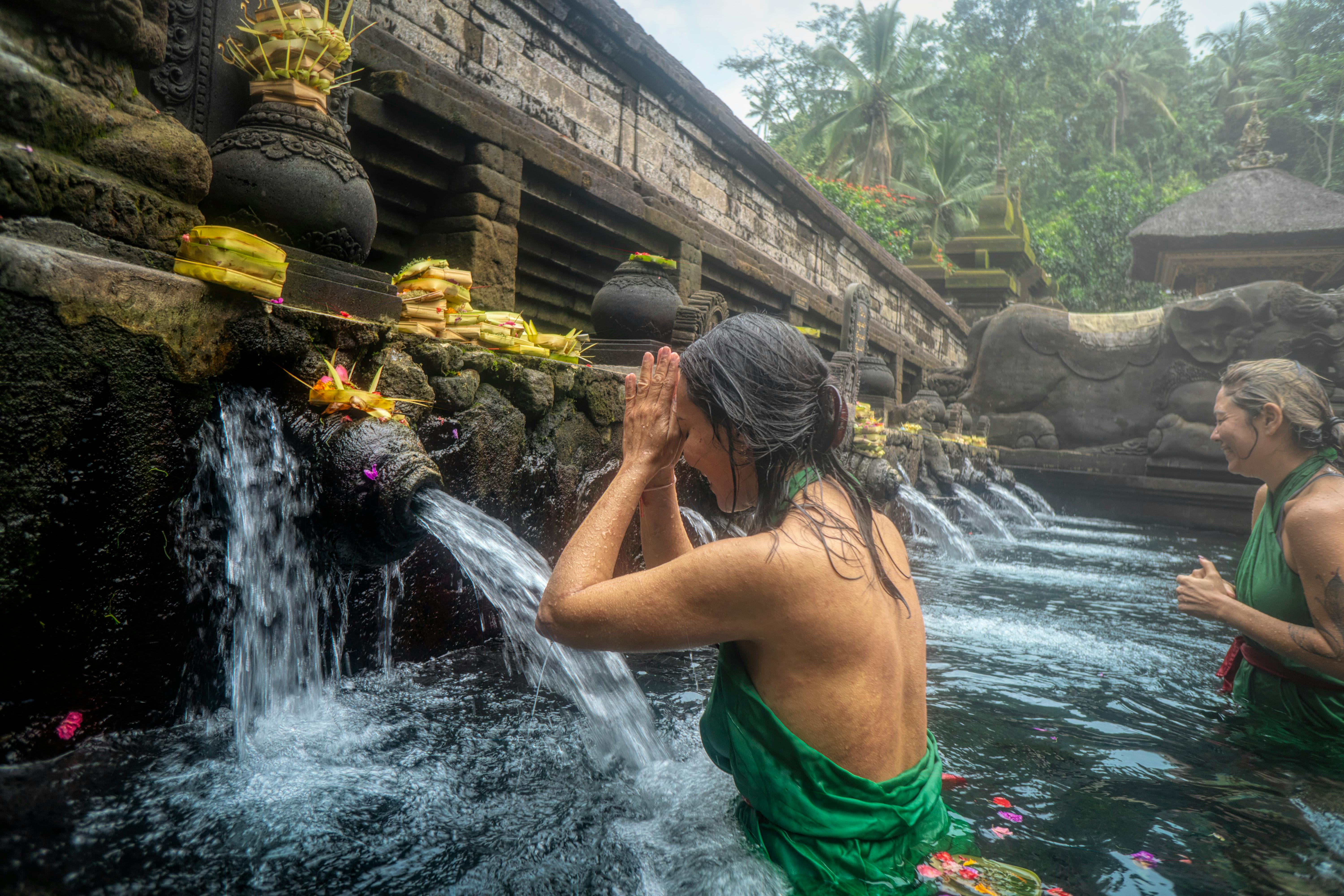
Of all the temples I visited, Tirta Empul left the deepest impression. This thousand-year-old water temple is built around a natural spring, and Balinese Hindus come here to perform a purification ritual - wading into the cool, crystal-clear pools and passing beneath a series of stone water spouts, each with its own prayer. I participated with guidance from a local priest, and the experience was profoundly moving - cold water on skin, eyes closed, the sound of prayer in a language I couldn't understand but somehow felt.
The Monkey Forest and Ubud's Streets
Ubud's Sacred Monkey Forest is both a temple complex and a nature reserve, home to over 700 long-tailed macaques who have the run of the place. Watching them play among the ancient stone carvings and moss-covered statues is endlessly entertaining (and slightly chaotic). Beyond the forest, Ubud's streets offer a mix of traditional Balinese craft workshops, contemporary art galleries, and some of the best plant-based restaurants I've ever visited.
Essential Tips
- Best Time: April to October (dry season); mornings are always best for temple visits
- Dress Code: Wear a sarong and sash for temple visits - most temples provide them, but bringing your own shows respect
- Scooter: Renting a scooter is the easiest way to explore, but drive carefully - Bali traffic is intense
- Ceremonies: If you hear gamelan music, follow it - you might stumble upon a temple ceremony (ask before entering)
- Stay Local: Choose a family-run guesthouse over a resort for a more authentic experience
Bali's spiritual side isn't something you find in a guidebook - it's something you feel in the air, in the rhythm of daily offerings, in the smile of a stranger who invites you to sit and share tea. Ubud reminded me that travel at its best is not about collecting sights, but about opening yourself to a different way of seeing the world.
Have your own travel story to share?
Share Your Story